


The development of nautical clocks
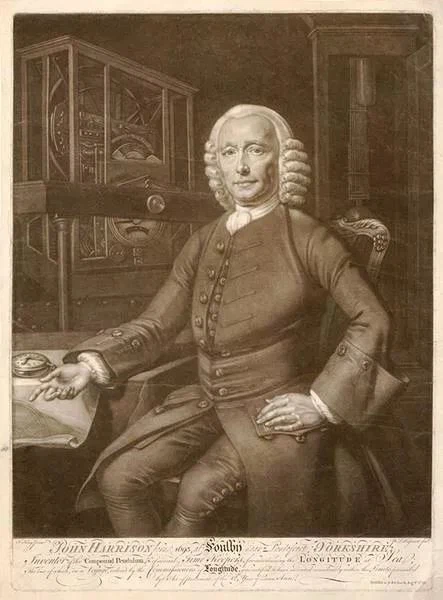
Copper engraving by John Harrison (1693-1776), P.L. Tassaert, from a painting by Thomas King
Bad weather," complained Admiral Sir Clowdisley Shovell, as he glared at the fog that had plagued him for twelve days at sea. After a victorious battle with the French Mediterranean fleet, he sailed from Gibraltar to England on September 29, 1707, at the head of 21 Royal Navy ships. Fearing that the ships might run aground, the admiral ordered his navigators to be aware of this problem. (Tide Clock Movement)The consensus was that the fleet was a safe distance west of Aschentian (Ushant), however, the navigators misjudged their position. The Isles of Scilly, located 20 miles off the southwest tip of England, became the unmarked grave of 2,000 soldiers. (Tide Clock Movement)
"Longitude Act"
For centuries, scientists, sailors and politicians have worked to find a way to locate the sea. The governments of maritime nations have promised huge prizes. In the Longitude Act of July 8, 1714, the British Parliament offered the highest prize. The first person to find a way to determine geographical longitude would receive a prize of £20,000 (about $30 million today).(Tide Clock Movement)
John Harrison (1693-1776)
John Harrison, born on March 24, 1693 to a poor family in Yorkshire, learned the trade of woodworking. in 1713, not yet twenty years old and without any training as a clockmaker, he made his first clock. Many more Tide Clock Movement were made later.
No one knows when, or in what way, Harrison first learned of the Longitude Prize. Perhaps he had studied the problem before. In 1737, he presented his Tide Clock Movement to the Board of Longitude in order to create a clock that would work accurately even at sea, replacing the pendulum with two dumbbell balance pendulums connected together. Although hisTide Clock Movement was inaccurate by only a few seconds per day on the trial voyage from London to Lisbon, he declared that his Tide Clock Movement still had some shortcomings that needed improvement. Over the next 20 years, he refined his ideas and completed his fourth marine Tide Clock Movement in 1759.
Many years passed, however, before Harrison received his reward. It was not until 1773, three years before Harrison's death, that King George Ill intervened in Harrison's case and Harrison received his full prize.
John Arnold (1736-1799)
John Harrison's Tide Clock Movement were great, but complicated to make and therefore expensive. John Arnold designed a cheaper model. in 1782, he was granted a patent for a new escapement and a compensated balance pendulum. The most important aspect of Arnold's design was the very short contact time between the balance pendulum and the gear train when triggering the movement's thrust.
The first marine Tide Clock Movement equipped with this new escapement was No. 13. The German Watch and Clock Museum has clock No. 16 in its collection, said to have been made in 1783.
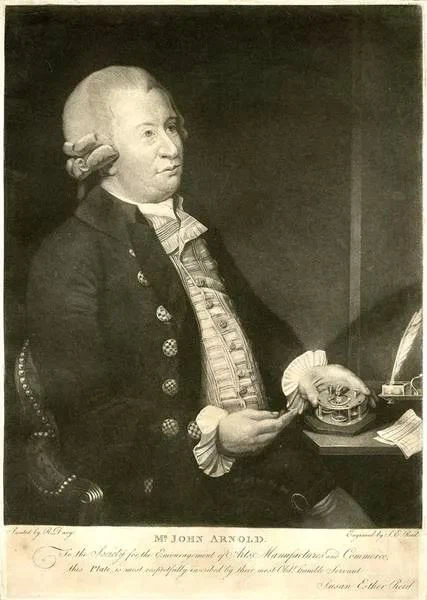
John Arnold (1736-1799). Engraving by Susan Esther Reid, from a painting by Robert Davy (British Museum)
Arnold's invention changed Tide Clock Movement the way of positioning on the high seas. Thanks to the sextant and the Tide Clock Movement , sailors today know their position even after weeks on the high seas, as was the case in 1789, when Captain Welladvice, commander of the Indiaman, determined his position in the middle of the night by using his Arnold's nautical clock, and Welladvice found that he was close to the Sili Islands. At midnight, he ordered the ship to anchor. After dawn, he saw the reef just ahead of him, and the tragedy of 1707 was not repeated.
HMS Victory (Victory) Tide Clock Movement
HMS Victory was a famous ship of the British Navy. In the Battle of Trafalgar in 1805, the British fleet under the command of Lord Horatio Nelson defeated the combined French and Spanish fleet led by Napoleon and established Britain's supremacy at sea. In 1805, the British fleet under the command of Lord Horatio Nelson defeated the combined French and Spanish fleet led by Napoleon and established Britain's supremacy as a maritime power.
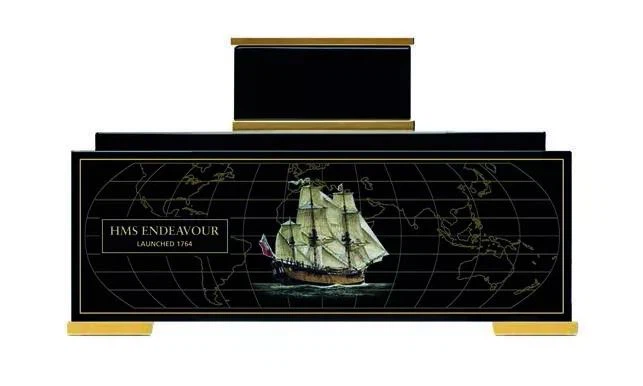
HMS Victory (Victory) Tide Clock Movement
HMS Victory was a famous ship of the British Navy. In the Battle of Trafalgar in 1805, the British fleet under the command of Lord Horatio Nelson defeated the combined French and Spanish fleet led by Napoleon and established Britain's supremacy at sea. In 1805, the British fleet under the command of Lord Horatio Nelson defeated the combined French and Spanish fleet led by Napoleon and established Britain's supremacy as a maritime power.
These world-famous ships bear witness to those glorious years at sea, and the Tide Clock Movement, the most accurate maritime timepiece of its time, overcame the difficulties and obstacles to their voyage, giving the British Empire Navy an extraordinary advantage in its pursuit of global exploration, trade and imperial domination.Tide Clock Movement

